
Today is Monday, October 28th, US time. For the second day of my training, I attended a conference on intervertebral disc treatment at Dr. Pauza's office. I would like to report on what I learned during this four-hour session, summarized into three key points.
① Current State of Intervertebral Disc Treatment
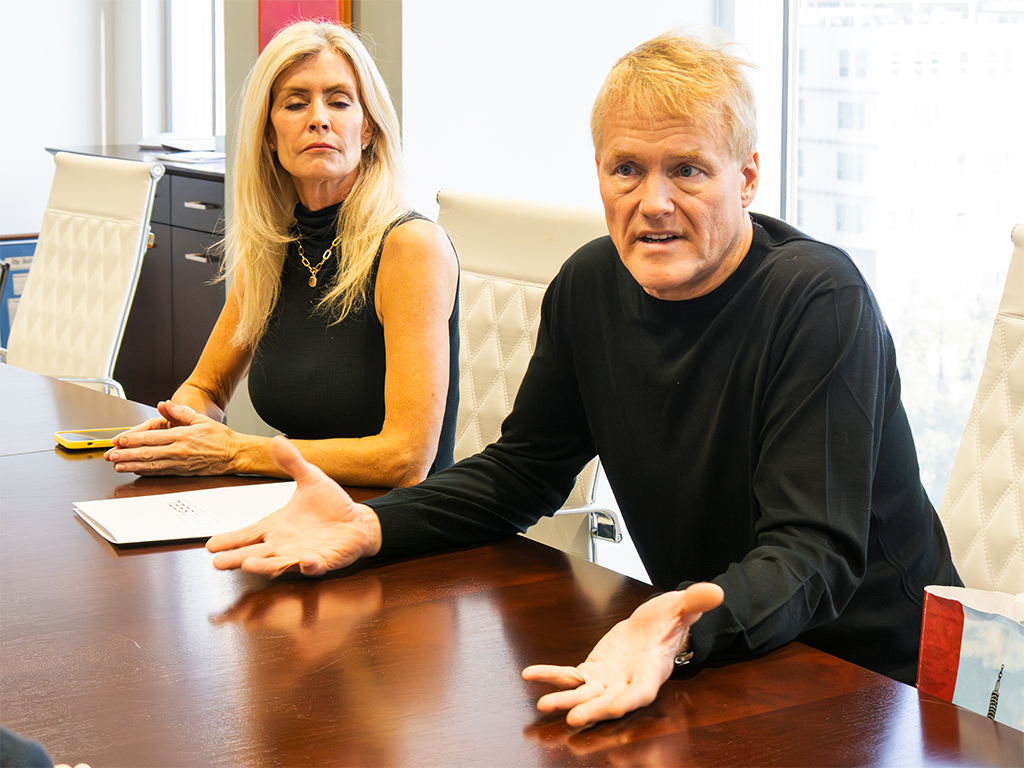
In North America, it appears that surgical procedures themselves are becoming less common. The reason is that intervertebral disc treatments are increasingly being performed prior to surgical intervention. These treatments include stem cell-related therapy, PRP therapy, and the Discseel® Procedure. A comparative analysis of these methods has concluded that their efficacy follows the trend of PRP Therapy ≤ Stem Cell-Related Therapy < Discseel® Procedure. Consequently, the Discseel® Procedure has been approved for government insurance. While these disc treatments are also available in Japan, their comparative effectiveness has unfortunately not been formally evaluated; however, based on North American data, it is highly likely that the Discseel® Procedure holds a clinical advantage.
As a result, there is a surge in patients requesting the Discseel® Procedure in North America, with people flocking not only from within the U.S. but also from many neighboring countries. Olympic athletes (such as those in bobsledding and gymnastics) are also visiting from abroad for treatment. I have personally treated two Olympic hopefuls earlier this year, and it seems the Discseel® Procedure is becoming a major topic of conversation among elite athletes.
② Current State of Cervical Spine Treatment
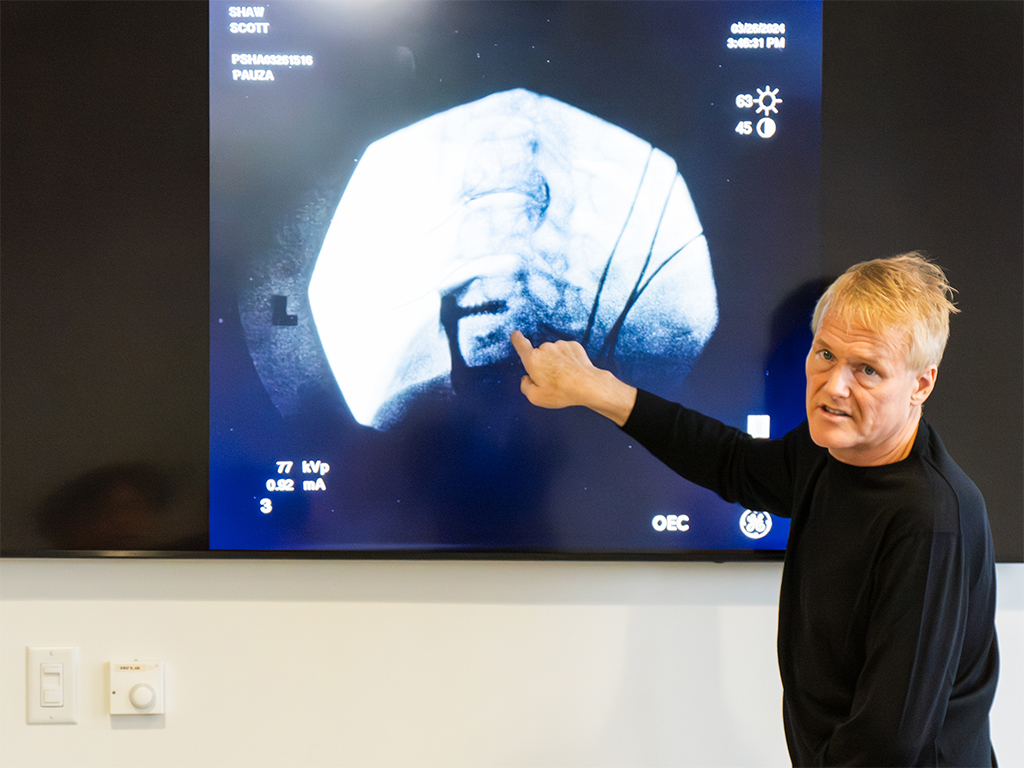
In North America, the number of patients seeking the Discseel® Procedure for the cervical spine (neck) has surged to nearly the same level as those seeking it for the lumbar spine (lower back). This is because cervical Discseel® treatment has been reported to improve even headaches and dizziness. The efficacy rate for cervical treatment is over 80%, reportedly surpassing the results of lumbar treatments. Furthermore, the recent insurance approval of Discseel® for patients suffering from post-accident neck pain, headaches, and dizziness has significantly contributed to this rapid increase in patient numbers.
③ Combination with Exosome Therapy
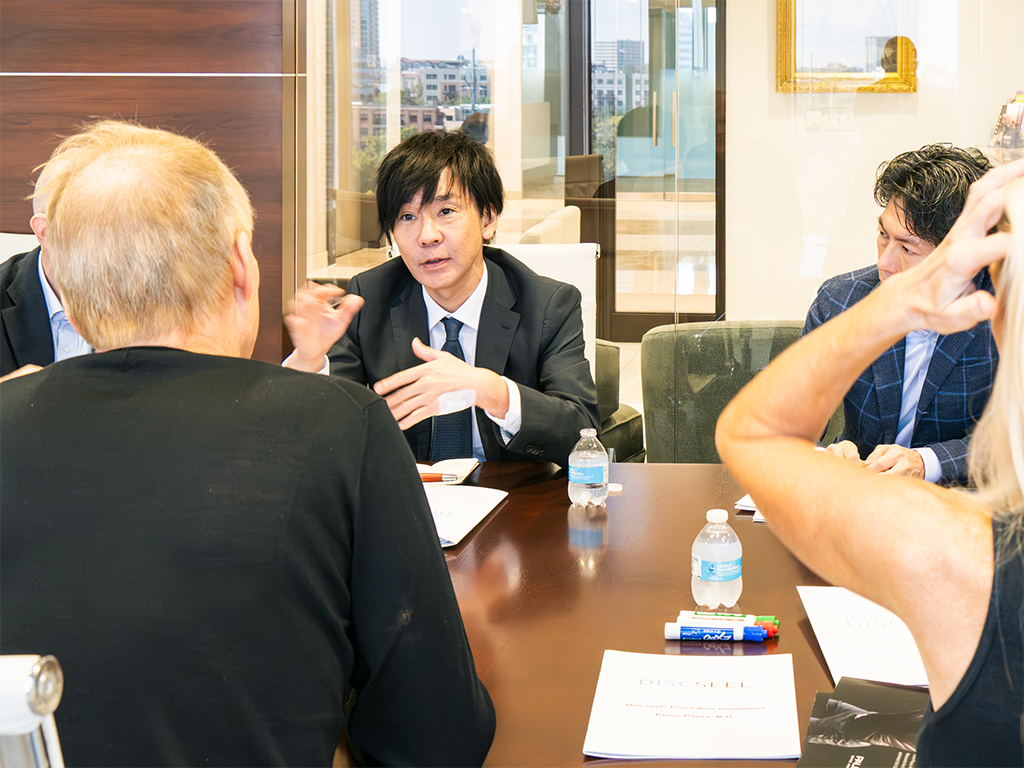
While exosome therapy is practiced in Japan, North American treatments utilize extremely high concentrations. In Japan, concentrations are around 2 billion units per ml, whereas in North America, they reach 10 billion units per ml. Producing such high-purity exosomes requires repeated, high-level refinement; I am unsure if current Japanese technical capabilities can match this level. I have to admit, it was a humbling experience. However, North American exosomes are very expensive, compared to those we use in Japan.
Much like in Japan, North American clinics use exosomes in aesthetics, but the key difference is their application for chronic joint disorders and as a supplement to the Discseel® Procedure. Specifically, in lumbar Discseel® procedures, exosomes are incorporated only when an annulogram shows a leak toward the nerve root. While exosomes alone have limited impact, their use in conjunction with the Discseel® Procedure reportedly improves the overall success rate.
I gained many other insights, but above all, I was astonished that regenerative medicine here is several levels ahead of Japan. Furthermore, because the number of patients has increased so significantly at Dr. Pauza’s facility, he has hired two dedicated doctors just for consultations and is performing 15 procedures a day. He mentioned he is "exhaustingly busy."
Director's Note
A Sense of Shock
The scale of treatment, the depth of knowledge, and the quality of pharmaceutical products were all beyond standard expectations. I used to think our clinic was at the forefront of back pain treatment in Japan, but I realized today that we are not yet even close to the level in North America. There, the Discseel® Procedure for back pain is now covered by government insurance, and they are expanding clinical indications by combining it with high-precision supplemental therapies. While there is no gap in technical skill, we are significantly behind in terms of knowledge and application. However, by bringing what I have learned during this training back to Japan, I am confident we can close that gap.
About the Author
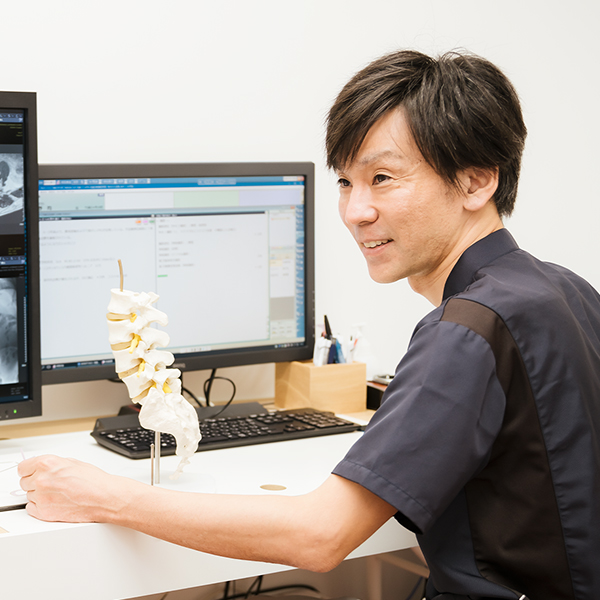
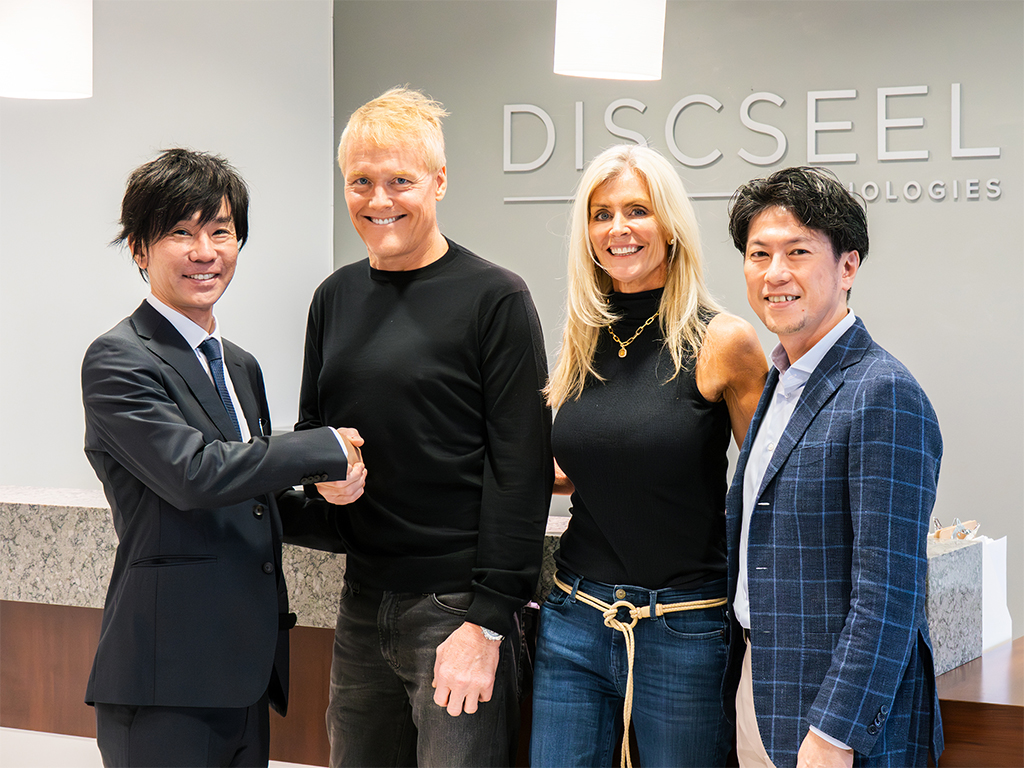
Clinic Director Dr. Yasuyuki Nonaka
NLC Nonaka Lumbago Clinic offers medical treatment with a combined focus on the spinal conditions that cause low back pain. By introducing advanced treatments from all over the world, we are able to expand the treatment options for patients suffering from back and other spinal diseases, and propose treatment solutions tailored to their symptoms and conditions. Staying focused on diseases such as disc degeneration and disc herniation that cause spinal canal stenosis and back pain, we provide treatments that are less burdensome for elderly patients, for patients considering reoperation, and those seeking to return to society in a short period of time.
Achievement:8,129 Cases
Jun. 2018 - Feb. 2025